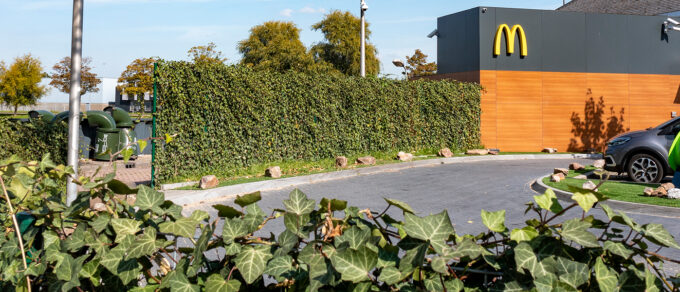



Green Screen greens the grounds of a sustainable biomass plant in Bemmel
- Mobilane Green Screen
- Location: Bemmel, Nederland
| Location | Bemmel, the Netherlands |
|---|---|
| Project type | Greening the outdoor grounds of a biomass plant |
| Solution | Green Screen (Hedera helix ‘Woerner’) |
| Application | Screening and defining parking spaces, softening the appearance of an industrial site |
| Environmental impact | Cooling, particulate matter capture and CO₂ uptake on a hard-surfaced industrial site |
From a functional site to a green environment
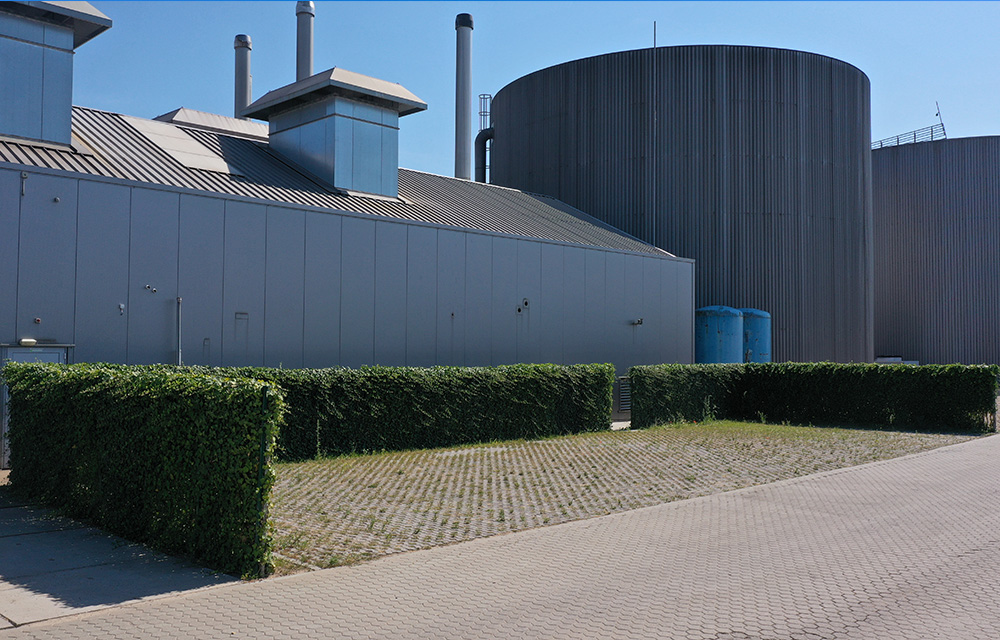
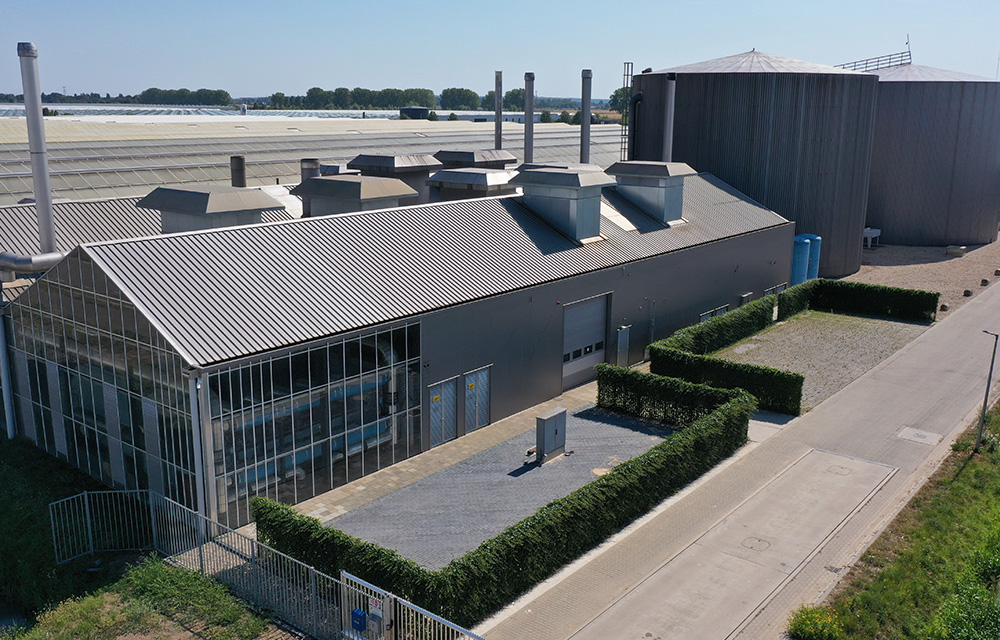
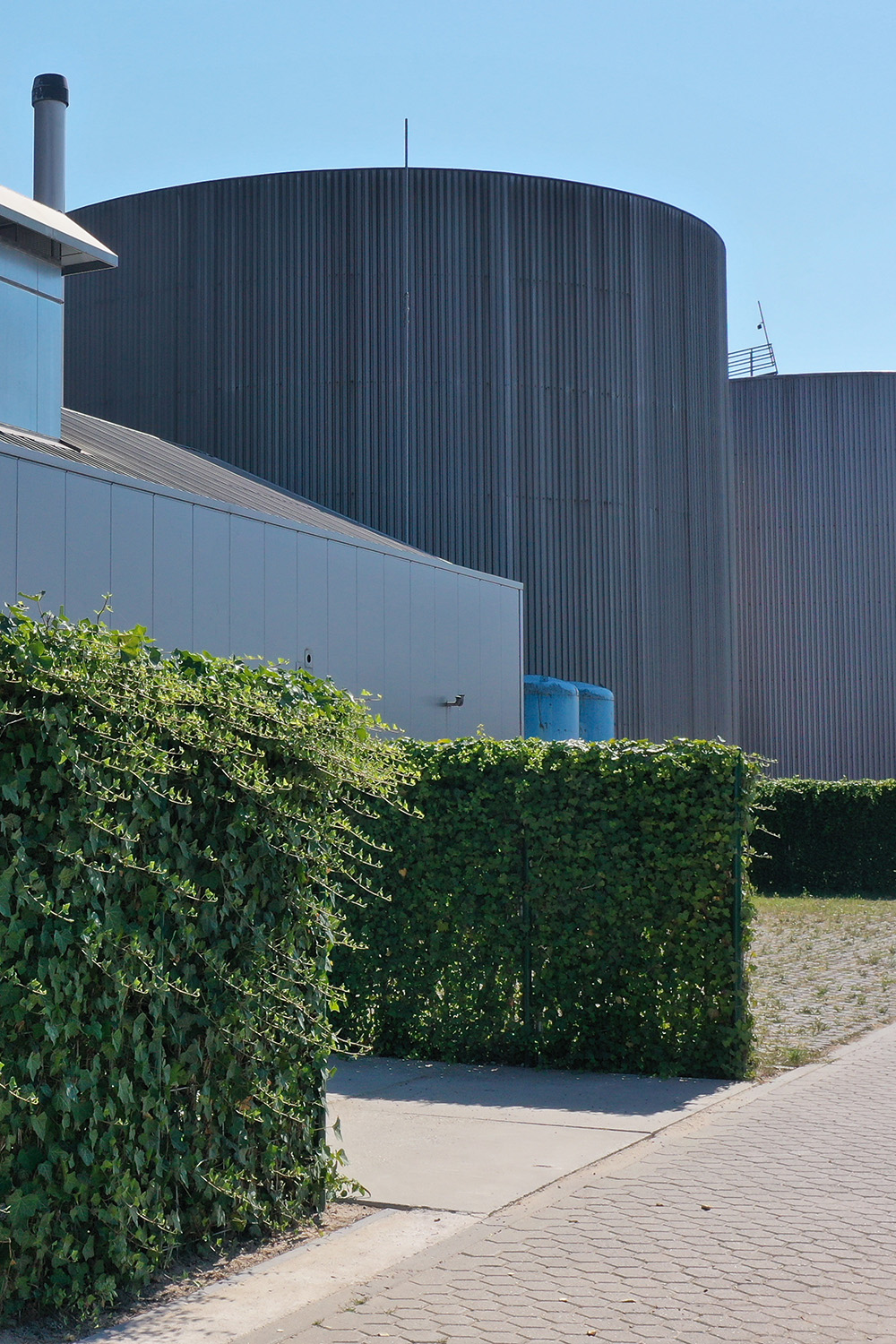
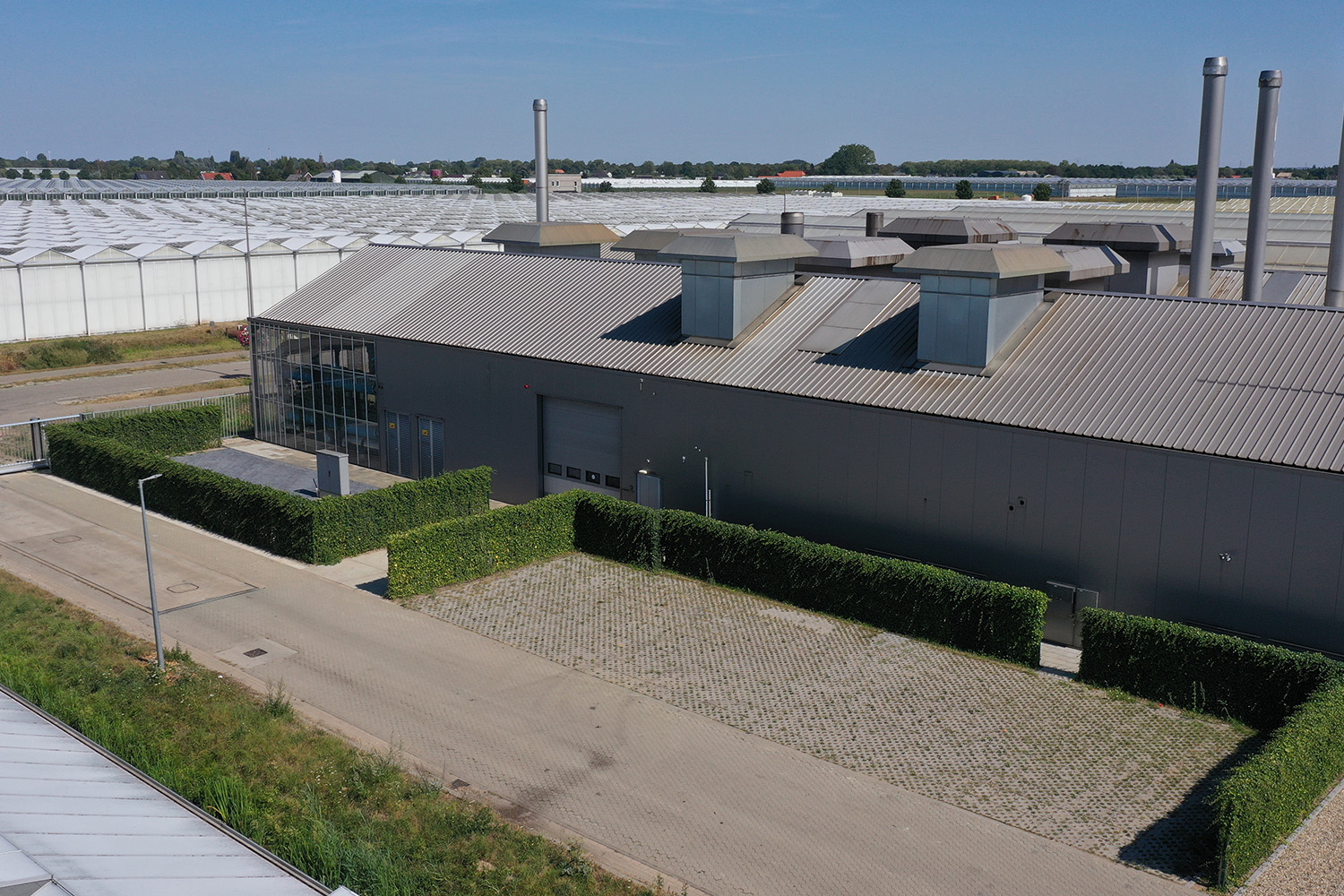
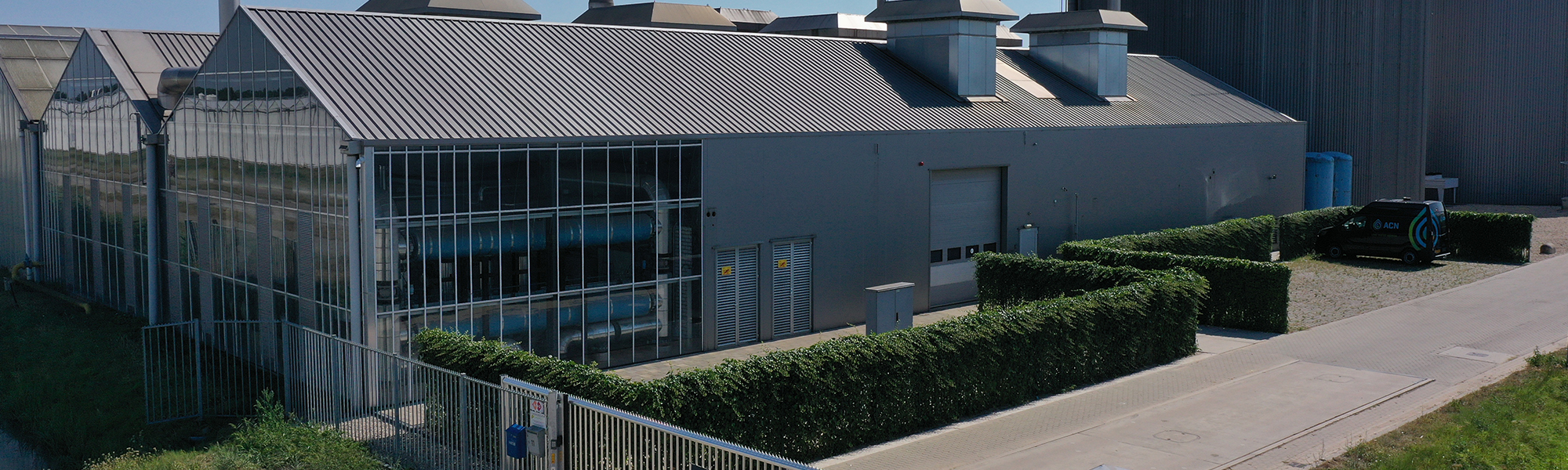
On an industrial site, functionality naturally comes first. This was also the case around the Lingezegen Energy biomass plant in Bemmel. The plant produces renewable heat and electricity for the surrounding horticultural sector and also supplies CO₂ to local greenhouses. While sustainability already plays an important role in what happens inside the plant, there was also a desire to make this green ambition more visible outside. The grounds were perceived as stark and industrial, creating a need for more greenery. View of the Lingezegen Energy biomass plant in Bemmel with Green Screens surrounding the site. The dense foliage of the Green Screen provides privacy and screens parts of the industrial site from view. Functional and less visually appealing areas of the biomass plant are concealed, while the greenery also creates a natural boundary between different parts of the site.
Adding greenery without sacrificing valuable space
Grass was initially considered as a way of making the site greener. However, a vertical green solution proved better suited to the location. By choosing Green Screens, greenery could be added without taking up a large proportion of the available ground space. Where a lawn primarily adds greenery at ground level, a Green Screen makes use of vertical space. This offers several advantages at this location. The Green Screens create an attractive green appearance while also providing screening and reducing overlooking across the industrial site.One green solution with multiple functions
The Green Screens also fulfil a practical role in the layout of the site. Previously, the parking spaces were not clearly separated. By strategically positioning the Green Screens, a clear and natural division between the parking spaces was created. The greenery therefore performs several functions at once: it greens the surroundings, uses limited space efficiently, provides greater privacy and creates structure across the site. And the result is immediate. As the Green Screens are supplied fully grown, the green screening was in place from the moment of installation. The green landscaping around the site also makes the biomass plant’s sustainability ambitions visible outside the building. While Lingezegen Energy’s sustainable activities normally take place primarily within its installations, the Green Screen now extends this ambition into the immediate surroundings of the complex.
Hedera Green Screen contributes to cleaner air on industrial sites
The Green Screens can also contribute to local air quality. Cars and lorries use the site every day, releasing particulate matter into the surrounding environment. The dense foliage of the Green Screen with Hedera helix ‘Woerner’ provides a large leaf surface on which these small particles can be captured. Research conducted by Mobilane in collaboration with Atkins and Staffordshire University shows that the Green Screen with Hedera helix ‘Woerner’ can capture 40–60% of (ultra)fine particulate matter, depending on the location and conditions. The ivy was studied for its ability to capture particles ranging from PM10 to PM1.0. This makes the Green Screen much more than a green boundary at this location. While the greenery provides structure and privacy, it also helps capture particulate matter from the immediate surroundings. In addition, plants absorb CO₂ during photosynthesis and release oxygen. The same narrow strip of land therefore not only provides instant greenery but also contributes to a greener, more climate-resilient and healthier environment.Greenery as part of a sustainable industrial site
The choice of greenery fits well with the character of Lingezegen Energy. The biomass plant plays a role in making the horticultural sector in Bemmel more sustainable. The green landscaping around the plant now makes this sustainable character visible outside the building too. The result has met expectations, says Berno Schouten.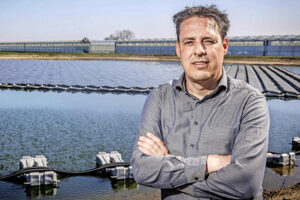
Green Screen at Lingezegen Energy demonstrates a cooling effect
Thermal images taken at the Lingezegen Energy biomass plant in Bemmel clearly demonstrate that the Green Screen not only contributes to a greener appearance but also provides a cooling effect. On a hot summer’s day, with an ambient temperature of 96.8°F, the surface temperature of the Green Screen was measured at 93.6°F, while the adjacent concrete paving reached 117.5°F. In the thermal images, the hard-surfaced area is clearly visible in red and pink, indicating a considerably higher surface temperature than the vegetated area. This represents a difference of 23.9°F. These measurements make the cooling effect of greenery tangible and demonstrate the role a solution such as the Green Screen can play in reducing heat stress on hard-surfaced industrial sites. For a functional location such as the Lingezegen Energy biomass plant, surrounded by concrete and buildings, this contributes to a more pleasant microclimate around the complex as well as to the wider ambition of creating more climate-resilient industrial sites. The project demonstrates how even functional, hard-surfaced industrial grounds can contribute to a greener and cooler environment.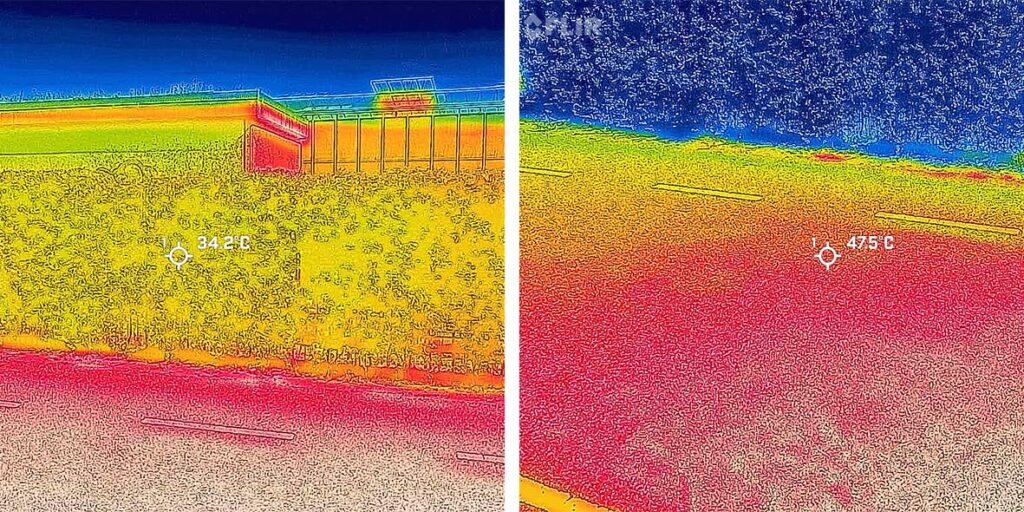
-
- Mobilane Green Screen: 93.6°F
- Concrete paving: 117.5°F
- Difference in surface temperature: 23.9°F
Frequently asked questions
The Mobilane Green Screen is a pre-grown green screen that provides an immediate green result from the moment it is installed. Its dense vegetation provides natural screening and privacy while requiring only a limited amount of ground space.
The Green Screens were installed around the grounds of the Lingezegen Energy biomass plant in Bemmel. They are used to screen parts of the industrial site, provide privacy and create a clear, natural division between parking spaces.
A Green Screen makes use of vertical space and therefore requires relatively little ground area. This allowed greenery to be introduced without sacrificing valuable space on the functional industrial site. At the same time, the Green Screens provide privacy, screening and a clearer site layout.
Yes. Green Screens can be used on business parks, industrial sites and car parks where space is limited but there is a need for instant greenery, privacy or natural screening. Their vertical design makes it possible to incorporate greenery efficiently into predominantly hard-surfaced environments.