


Green talks, Vanessa Champion on Biophilic Design and the power of living walls
3 September 2026As our connection to nature continues to decline, biophilic design is becoming essential in shaping healthier, more resilient built environments. Dr Vanessa Champion, founder of the Journal of Biophilic Design, shares why integrating nature into our spaces is no longer optional, and how living walls are playing a central role. With an extensive career background in media and advertising, Vanessa’s transition of focus towards biophilia is born from personal experience of her mother’s significant healing improvements in the hospital after being exposed to a view of nature. Her media skills are now tightly woven to uniting academic data with industry to integrate biophilic design into the built environment.
Biophilic Design a necessity, not a luxury
Biophilic design is about reconnecting people with nature through the built environment, placing human wellbeing at the centre of design. With rising concerns around biodiversity loss, mental health, and urbanisation, this approach is gaining urgency. As explored in more detail in What is Biophilic Design, it goes far beyond aesthetics, drawing on science, research, and practices developed by leading thinkers such as Terrapin Bright Green. “Biophilic design isn’t a ‘nice to have’ anymore,” Vanessa explains. “It’s essential to how we live, work, and feel. We spend more than 90% of our time indoors, often in environments that lack natural stimulation. We experience fewer daily interactions with nature, and Biophilic design helps address this disconnect, supporting healthier, more resilient and more productive spaces.”
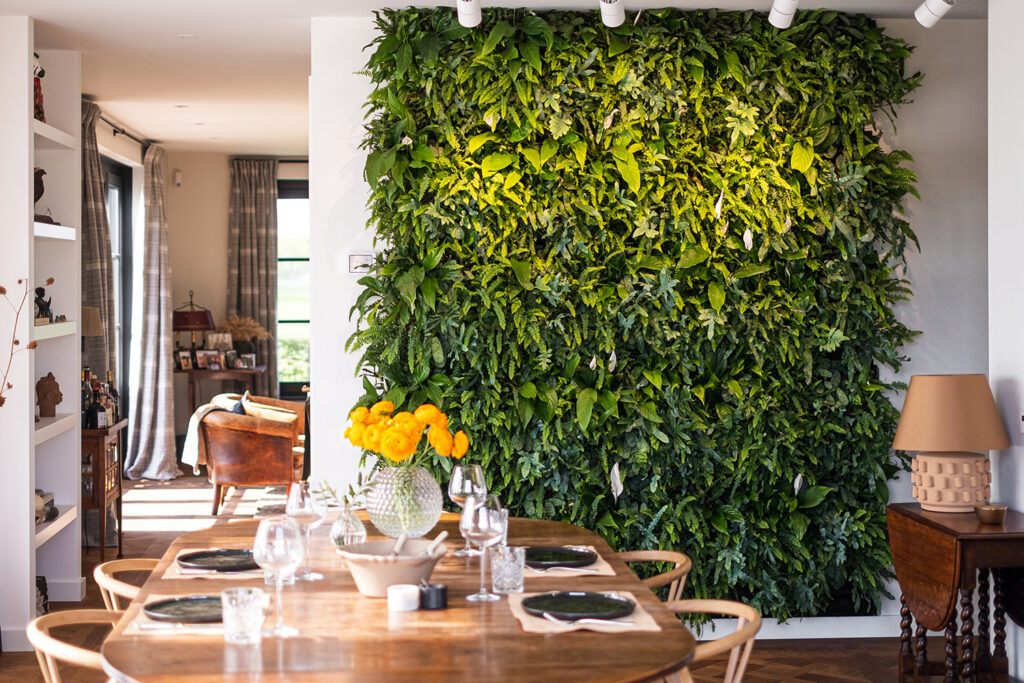
Why living walls matter
Living walls are one of the most impactful ways to bring nature into buildings. By integrating plants directly into vertical surfaces, they transform static spaces into living, breathing environments. More than a design feature, they:
-
- Introduce movement and visual interest
- Create immersive, sensory experiences
- Deliver measurable environmental benefits
Compared to smaller planting solutions, living walls have a far greater impact due to their scale and integration. “They transform otherwise inert surfaces into dynamic, living ecosystems, introducing movement, texture and seasonal change.”
Health, wellbeing and performance
Living walls contribute to healthier indoor environments by improving air quality and reducing pollutants such as VOCs. But their benefits go far beyond the physical. They also:
-
- Reduce stress and support mental wellbeing
- Improve focus and cognitive performance
- Create calmer, more restorative environments
“Plants bring life and change throughout the day,” Vanessa notes. “That dynamic quality makes a real difference to how people feel and function in a space. Access to greenery has been linked to lower blood pressure, improved recovery rates in healthcare settings and reduced symptoms of fatigue.” Accreditations such as the WELL building standard are benchmark practices that demonstrate the efficacy of biophilic design.
Biophilic design in healthcare
In healthcare settings, the impact of biophilic design is particularly powerful. Access to nature has long been linked to improved recovery, and living walls help bring these benefits into clinical environments. They can:
-
- Improve air quality in sensitive spaces
- Reduce anxiety for patients and visitors
- Support staff wellbeing in high-pressure environments
- Contribute to more humane, healing spaces
“Patients need nature to heal, it’s fundamental.”
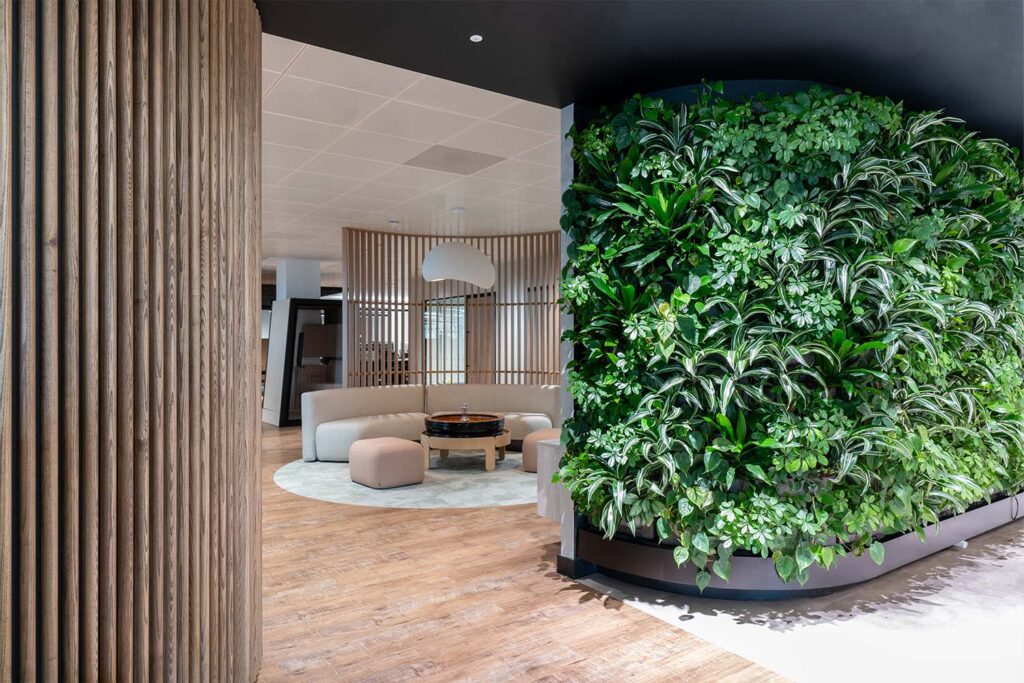
Supporting learning in education
In schools and universities, living walls can significantly enhance both well-being and learning outcomes. They help to:
-
- Improve air quality and concentration
- Reduce stress and fatigue
- Increase engagement through connection to nature
- External green walls can help regulate building temperatures, keeping classrooms cool in summer and insulated in winter.
- Create more stimulating, dynamic learning environments
By introducing natural systems into education spaces, they also help foster environmental awareness in younger generations. “They also become teaching tools helping students engage with ecology, climate and seasonal change in a tangible way.”
Connecting research, design and practice
Through the Journal of Biophilic Design, Vanessa has created a global media platform that brings together academia, designers, and practitioners. With a rapidly growing readership and a podcast reaching tens of thousands each month, the Journal plays a key role in sharing knowledge and driving real-world application. You can also explore insights via the Journal’s podcast series. The Journal continues to gain industry recognition and has recently been shortlisted for the British Society of Magazine Editors Best Art Team award, highlighting its strong visual identity, conceptual connection to nature itself and editorial quality. Its mission is to educate, connect, and inspire action. “We advocate that every environment should enjoy a direct connection to nature. Our core mission is to bridge the gap between science, design and real-world application.”
From ideas to action
Alongside the Journal, Vanessa organises events, workshops, and conferences that help translate biophilic design from theory into practice. These biophilic design events bring together professionals from across disciplines, architecture, science, and wellbeing, creating opportunities to collaborate, learn, and implement new ideas. In addition, platforms like the Biophilic Design Sourcing Hub are helping professionals access the tools, products, and expertise needed to apply these principles in real-world projects.
Looking ahead
Biophilic design is set to play a defining role in the future of architecture. From bio-based materials to fully integrated living systems, the focus is shifting towards environments that support both people and planet. “We need to bring nature back into everyday life,” Vanessa says. “It’s not optional – it’s essential. We are campaigning through our media platform for Biophilic Design implementation in healthcare, workplaces, education, homes and cities worldwide for people and planet. We welcome collaboration with companies like Mobilane to help accelerate awareness in industry. Together, we can design our built environment better for people and the planet.”
Mobilane making Biophilic Design achievable
As demand for biophilic solutions grows, practical implementation is key. Mobilane’s living wall systems make it easier for organisations to integrate nature into their spaces—whether in workplaces, schools, healthcare environments, or hospitality settings. Designed for performance and ease of use, Mobilane solutions:
-
- Improve indoor air quality
- Support wellbeing and productivity
- Integrate seamlessly into building design
- Offer reliable, low-maintenance solutions
By making living walls accessible and scalable, Mobilane helps turn biophilic design from concept into reality.

About Vanessa Champion
Vanessa is founder of Virtual Nature Walls, a biophilic graphics company producing nature and landscape prints, and runs Vanessa Champion Media, offering photography, video, PR, and publishing services to organisations across sectors from finance to interior design. She also founded PhotoAid Global Foundation, which brokers and commercialises photography for NGOs and charities worldwide.