



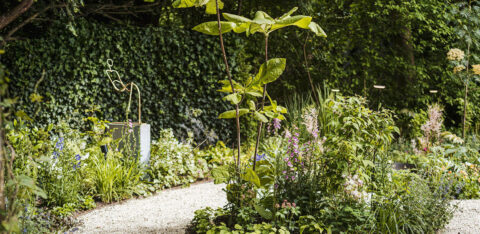
Green Talk: “Fully Grown Green Fences Should Be the Standard” – Nanda Sluijsmans
1 April 2026Fully grown green fences provide immediate privacy, enhance biodiversity, and contribute to climate adaptation. In this Green Talk, ir. Nanda Sluijsmans shares her perspective on the role of boundary solutions within nature-inclusive urban development. In many new-build projects, greenery is still treated as a final finishing touch. However, the design phase presents a key opportunity to add quality to residential environments from the outset. According to Nanda Sluijsmans, who is active in urban development and greening, one intervention stands out as particularly effective: installing fully grown green fences from the very beginning. “For some developers, this is completely standard practice, while for others it seems almost impossible,” says Sluijsmans. “Yet it is actually a simple choice with a significant impact.”
What does this choice say about a project?
“It immediately shows how seriously themes such as residential quality, sustainability, and nature-inclusive building are taken,” Sluijsmans explains. According to her, the choice of fully grown green fences goes to the heart of urban development. Is greenery considered an essential component, or merely an afterthought? “You can see that difference very clearly in boundary solutions. It may be a relatively small element, but it is something residents experience every day.”
What goes wrong with traditional installation?
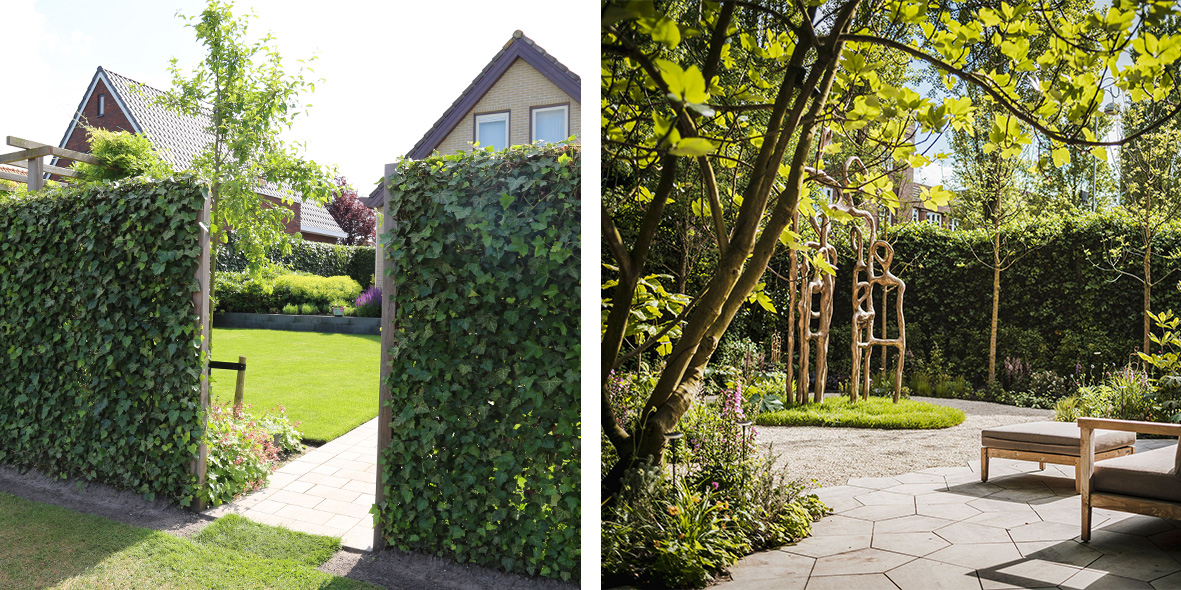
In many projects, fences are installed with young climbing plants that still need time to grow. The result is often an open and unattractive boundary. “Thin strands offer no privacy and no real quality. Residents then resolve this themselves by installing solid fences,” Sluijsmans explains. “As a result, not only is the green appearance lost, but so too is the contribution to biodiversity and climate adaptation.” According to her, this represents a missed opportunity on several levels:
-
- Visual quality of the residential environment
- Living comfort and privacy
- Ecological value
- Climate resilience
What are the benefits of a fully grown green fence?
The key difference lies in both the immediate effect and long-term development. “A dense green fence works from day one,” says Sluijsmans. “And it improves every year.” The added value includes:
-
- Immediate privacy and a green streetscape
- Increased biodiversity, as it provides shelter and eventually serves as a food source
- Improved water absorption due to healthy soil and root structures
- Cooling effects in the living environment
- Development of soil life
“The system strengthens itself over time — more roots, more branches, more life.”
Isn’t it more expensive to do it right from the start?
“That assumption is actually incorrect,” Sluijsmans states. “Compared to total construction costs, the difference is minimal.” In return, it offers clear added value:
-
- Fewer modifications by residents
- A more consistent streetscape
- A higher quality living environment
“It is a small investment with a significant impact, both in the short and long term.”
What should be considered during installation?
According to Sluijsmans, success lies in proper execution. “Have this installed by a landscaper, not a contractor. It requires knowledge of soil conditions and root space.” Key considerations include:
-
- Sufficient rootable soil volume
- Proper soil structure
- The right plant selection
- Integration of ecological elements
“A simple addition such as a hedgehog passage immediately connects gardens into a larger ecosystem.”
How does this fit within nature-inclusive building?
Fully grown green fences are, according to Sluijsmans, a practical example of nature-inclusive building. “This demonstrates that greening does not have to be complex. Instead, it is about making conscious choices at the right moments in the process. It also creates opportunities to go further:”
-
- Use of native plant species
- Variation in planting, such as mixed hedging at different heights
- Connecting green structures
What needs to change in the sector?
According to her, the key lies in prioritisation. “Green infrastructure deserves the same level of attention as building homes. Only then will you achieve a plan that truly works.” Fully grown green fences are not a luxury, but a logical step. “It is simple, effective, and immediately visible. That is exactly why it should become the standard.”
About Nanda Sluijsmans
Nanda Sluijsmans is an urban planner and landscape designer, and the founder of Sluijsmans Urbanism and Landscape. She works with municipalities, developers, and housing associations to create green, future-proof living environments. Her work focuses on climate adaptation, biodiversity, and nature-inclusive building. Her approach is characterised by translating ambitions into practical, implementable solutions with immediate added value for the living environment. In addition, she actively shares knowledge and inspiration through lectures and social media, offering practical insights into greening urban areas.